
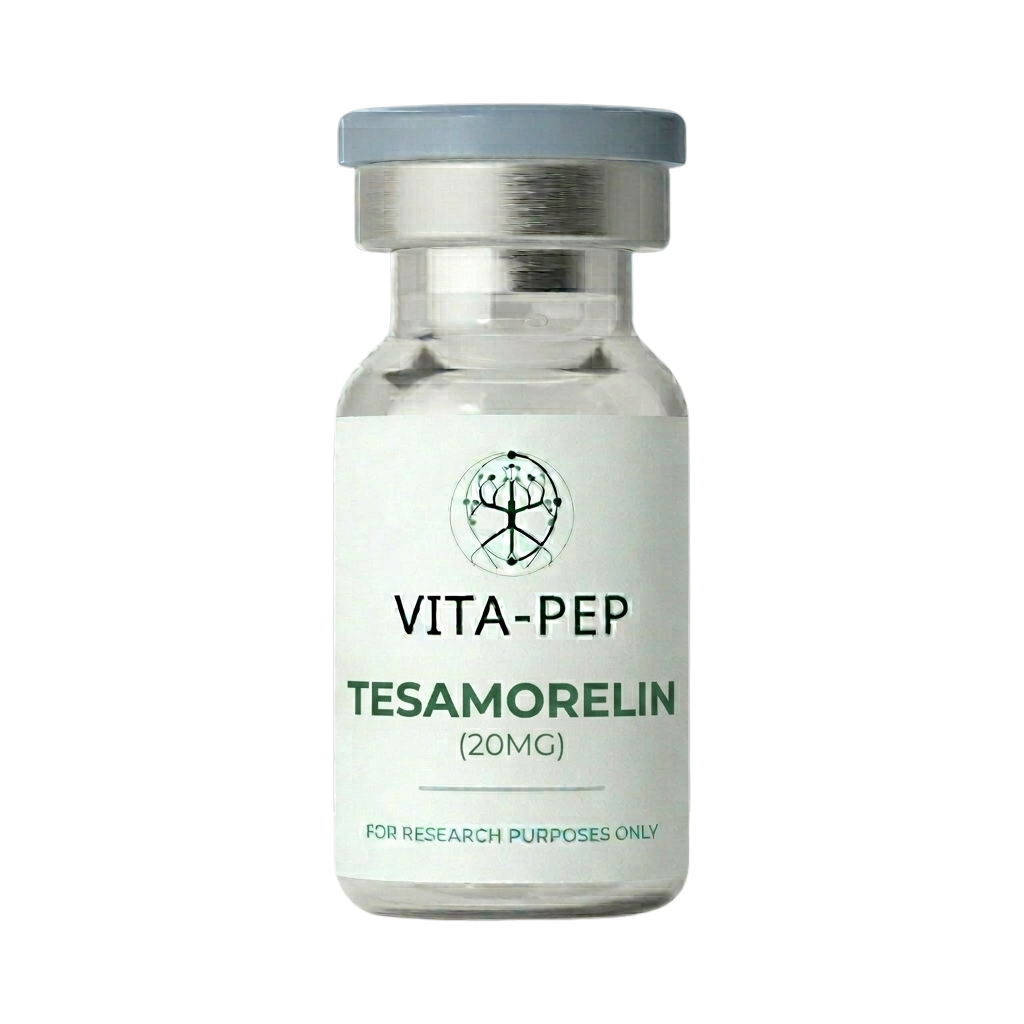
Key Research Areas:
- Growth Hormone Stimulation — Tesamorelin is a synthetic GHRH analog that prompts the pituitary gland to increase growth hormone output, making it particularly relevant for research involving individuals with deficient growth hormone levels.
- Fat Loss & Body Composition — Studies have demonstrated Tesamorelin’s ability to meaningfully reduce visceral fat accumulation — especially in the abdominal region — which is commonly associated with metabolic conditions such as type 2 diabetes and cardiovascular disease.
- Cognitive Function & Memory — Emerging research suggests Tesamorelin may exert neuroprotective effects, with some studies pointing to improvements in cognitive function and memory, particularly among older populations or those experiencing cognitive decline.
- Anti-Aging & Longevity — Tesamorelin is being investigated for its potential to mitigate visible signs of aging by restoring growth hormone levels closer to those seen in younger individuals, with possible benefits including improved skin quality, increased muscle mass, and enhanced energy levels.
- Metabolic Health — Research indicates Tesamorelin may support insulin sensitivity and lipid metabolism, positioning it as a subject of interest in the study of metabolic syndrome and related conditions.
Product Care & Storage:
- Shipping & Stability — All products are lyophilized prior to shipping, ensuring stability in transit for up to 3–4 months. Reconstitution with bacteriostatic water is required before research use.
- Lyophilized / Powder Form — Store in a cool, dry location away from direct light. Room temperature storage is acceptable for several weeks. For long-term preservation spanning months to years, freezing is recommended to best maintain potency and integrity.
- Reconstituted Form — Once mixed, refrigerate below 39°F. Stability is maintained for up to 30 days.
- Usage — We are unable to provide dosing guidance; however, all products are considered pharmaceutical grade.
- Disclaimer — This product is intended strictly for research purposes and is not approved for human consumption, clinical treatment, or diagnostic use. Standard laboratory safety protocols should be observed at all times when handling peptides.